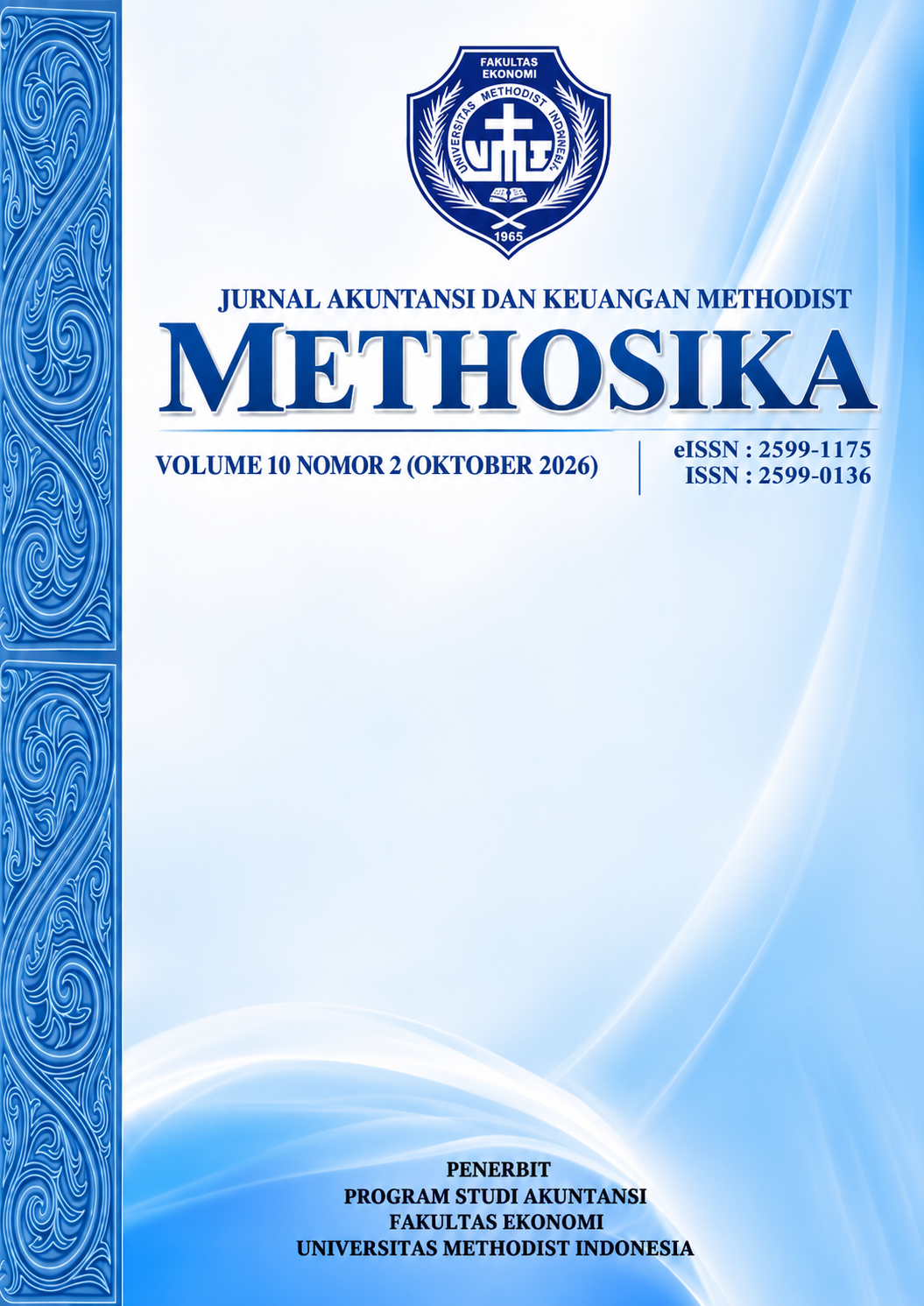
Determinasi Arus Kas Masa Mendatang: Analisis Perubahan Modal Kerja, Utang, Piutang, Persediaan, dan Inflasi pada Sektor Ritel
DOI:
https://doi.org/10.46880/jsika.Vol10No2.pp430-443Keywords:
Changes in Equity, Changes in Liabilities, Changes in Accounts Receivable, Changes in Inventory, InflationAbstract
This study begins with an analysis of future cash flow estimates based on financial statements, which provide critical information that influences investment and lending decisions. The research problem is how changes in equity, changes in debt, changes in receivables, changes in inventory, and inflation affect future cash flows in retail companies. The primary objective is to analyze the impact of changes in equity, debt, accounts receivable, inventory, and inflation on future cash flows in the retail sector. A quantitative causal approach is used, and data processing uses multiple linear regression analysis using SPSS. This study focuses on retail subsector issuers listed on the Indonesia Stock Exchange (IDX) between 2022 and 2024. A sample of 37 companies with a total of 111 observations was selected using a sampling method. The t-test results indicate that only changes in equity have a relevant impact on future cash flows; the other variables—changes in debt, accounts receivable, inventory, and inflation—are insignificant. Furthermore, an F-test confirms that the combined impact of these five variables on future cash flows is irrelevant. These results indicate that investors should consider other alternative indicators, such as net profit, company size, and net sales, before making investment decisions.
Downloads
Published
Issue
Section
License
Copyright (c) 2026 Asro'i Maryatun, Sigit Puji Winarko, Mar’atus Solikah

This work is licensed under a Creative Commons Attribution-NonCommercial 4.0 International License.